Revenue Bottlenecks Hidden Inside Legacy PHP Systems
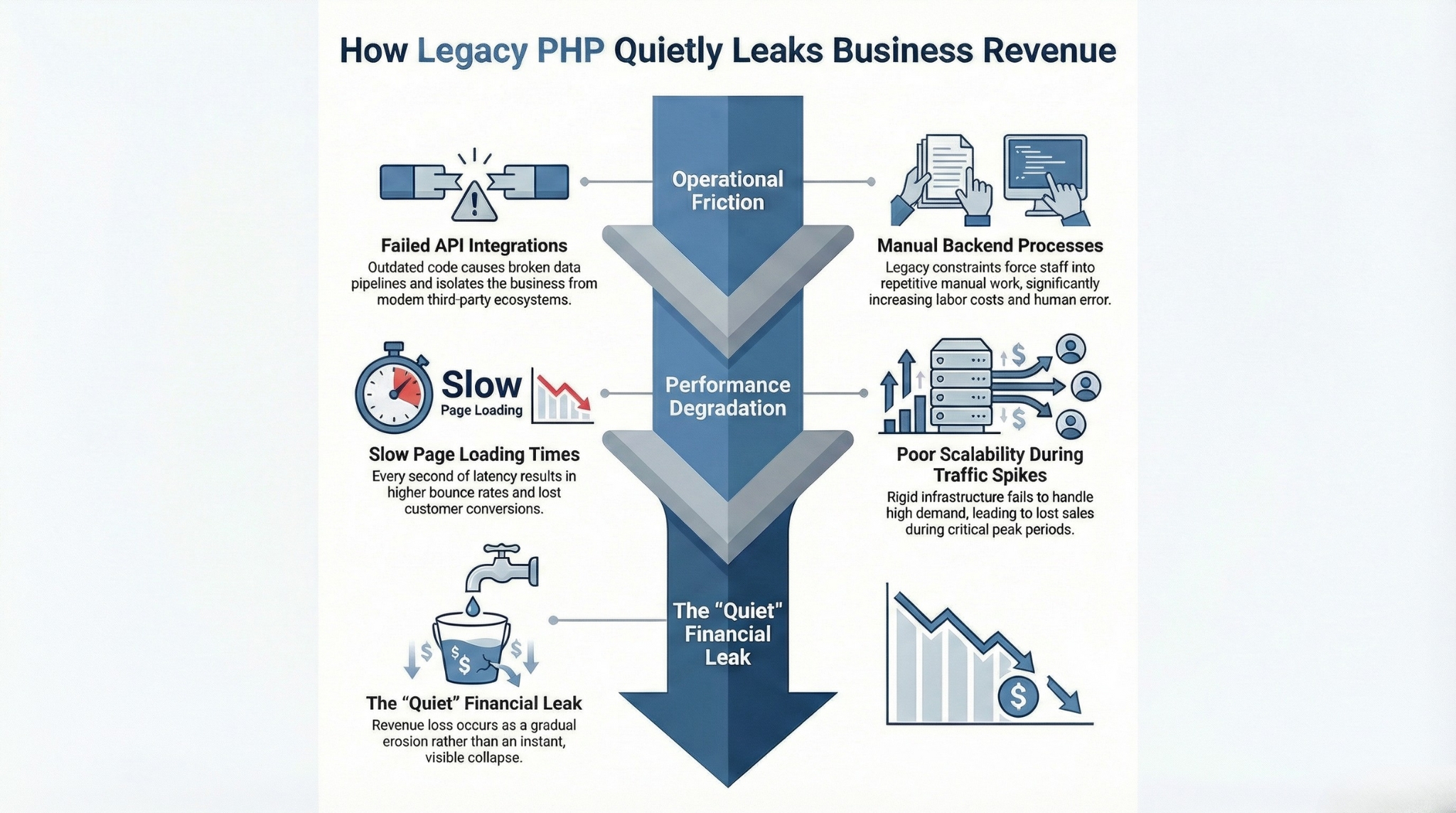
Many PHP-based platforms still operate on codebases written years ago. While they may function on the surface, the underlying structure often creates friction that directly impacts revenue.
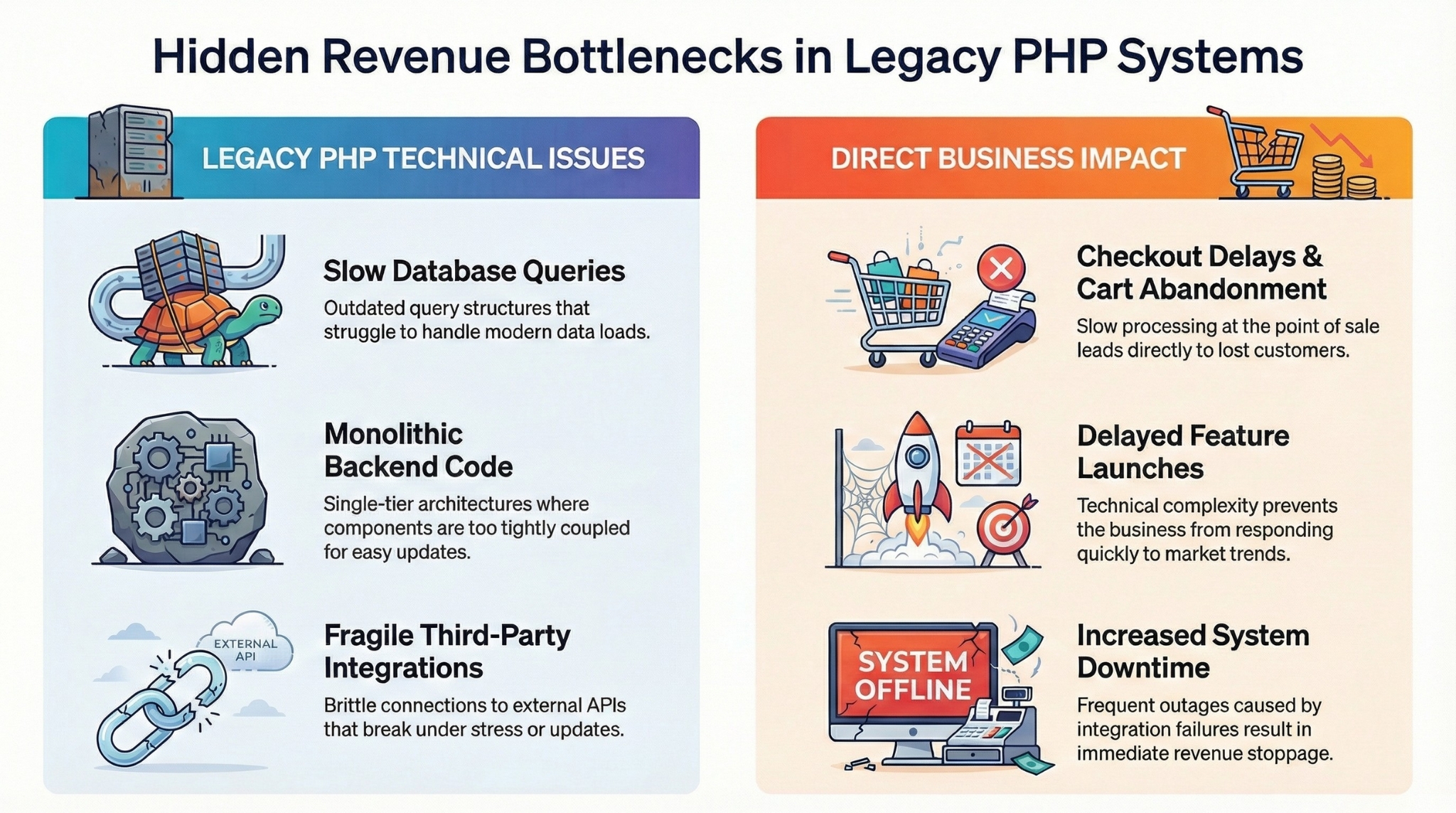
Common PHP-related bottlenecks include:
- Slow server-side execution is increasing bounce rates
- Poor database query handling is causing checkout delays
- Monolithic codebases that block feature updates
- Manual workflows that consume staff time
- Fragile third-party integrations that break silently
A one-second delay in page response time can reduce conversions by up to 7%, according to industry performance benchmarks. For transaction-heavy platforms, the cost multiplies quickly.
How Modern PHP Architecture Solves These Problems
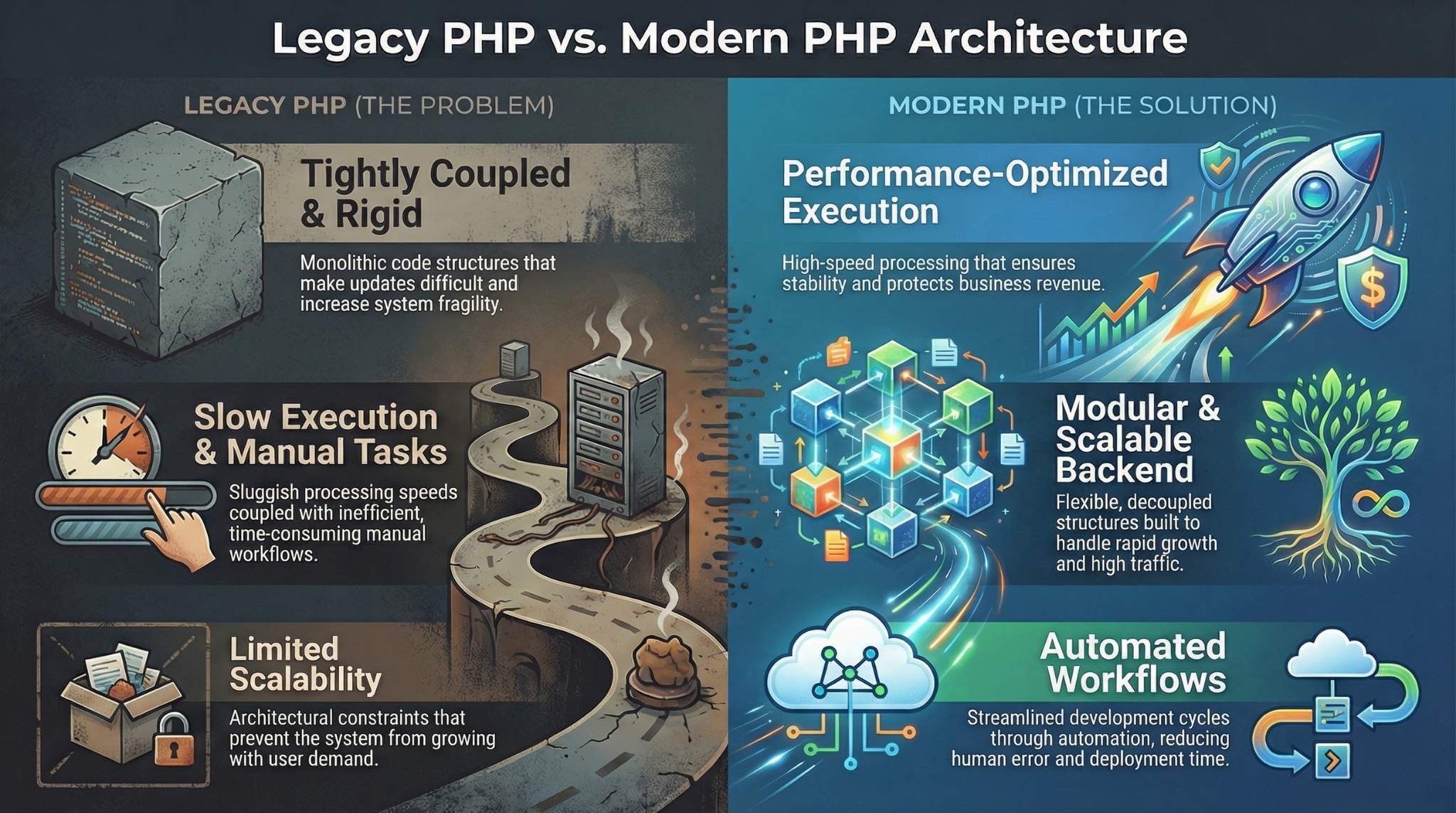
Modern PHP builds focus on speed, modularity, and integration-first design, three pillars that directly support revenue growth.
PHP Performance Optimization at the Core
Performance is no longer optional. Modern PHP leverages:
- Opcode caching and memory optimization
- Optimized database indexing and query execution
- Asynchronous task handling for heavy processes
- Clean separation of business logic and data layers
Effective PHP performance optimization reduces response times, improves checkout reliability, and supports higher concurrent traffic without infrastructure overload.
PHP Backend Improvement That Supports Scale
Legacy systems often collapse under growth because backend logic was written for fixed use cases.
Modern PHP backend improvement focuses on:
- Modular service-based architecture
- Clear API boundaries between systems
- Scalable authentication and authorization layers
- Fault tolerance for high-volume operations
This allows teams to add features, onboard users, or enter new markets without rebuilding the entire platform.
API-First Development Unlocks Revenue Opportunities
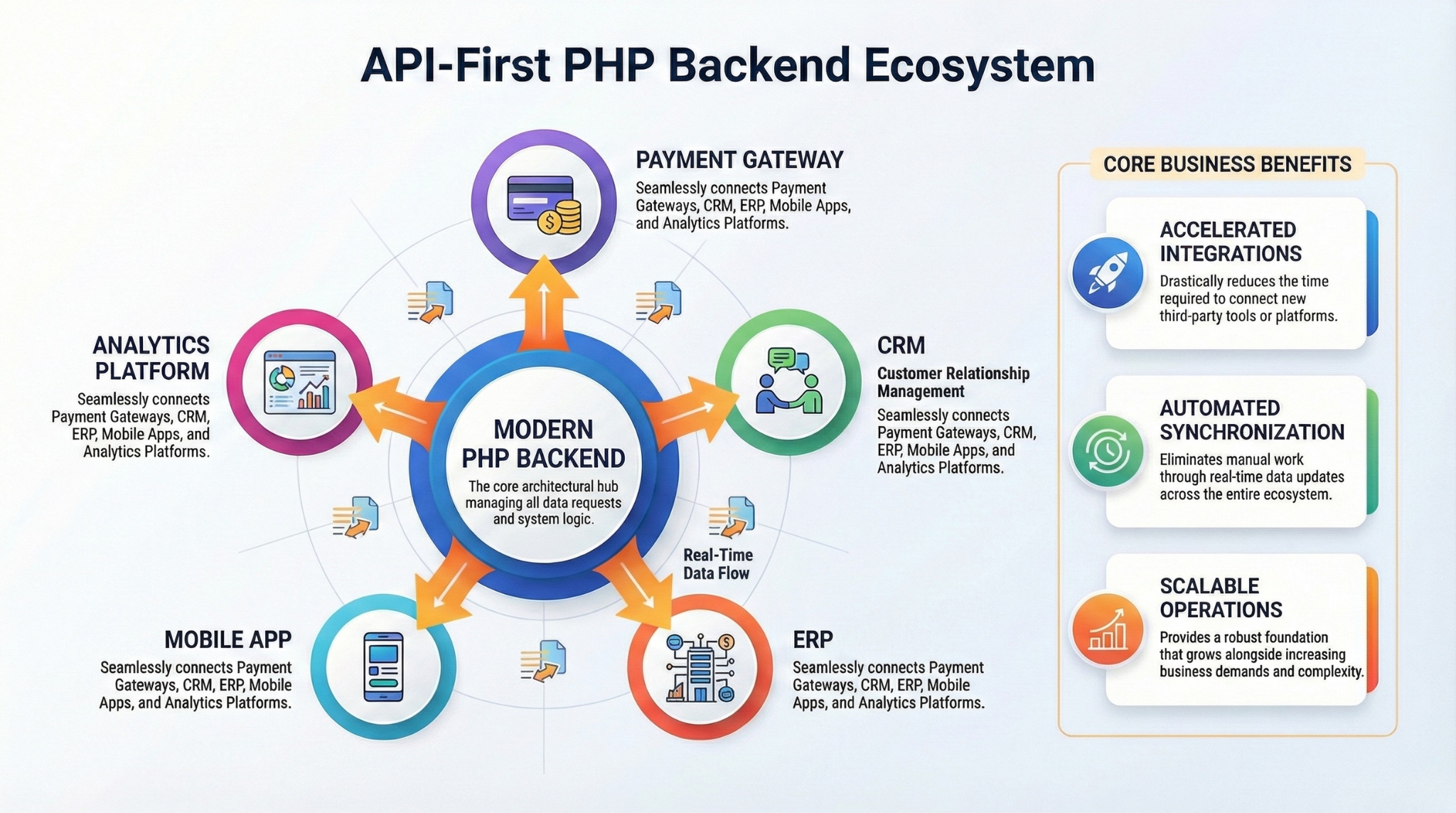
Today’s businesses rely on constant data exchange, payment gateways, CRMs, ERPs, analytics tools, logistics systems, and mobile apps.
A modern PHP API integration service enables:
- Secure REST or GraphQL APIs
- Real-time data synchronization
- Faster partner onboarding
- Reduced dependency on manual exports
When APIs work reliably, operations move faster, and customer experiences stay consistent across channels.
Automating Business Processes with PHP
Manual backend operations quietly burn revenue through delays and errors. Modern PHP systems replace these inefficiencies with automation.
PHP-based business automation supports:
- Automatic order processing and fulfillment
- Real-time inventory updates
- Scheduled reporting and alerts
- Workflow-driven approvals and notifications
Automation reduces operational costs while increasing transaction velocity, both of which directly improve margins.
Real-World Impact: What Businesses See After Modernization
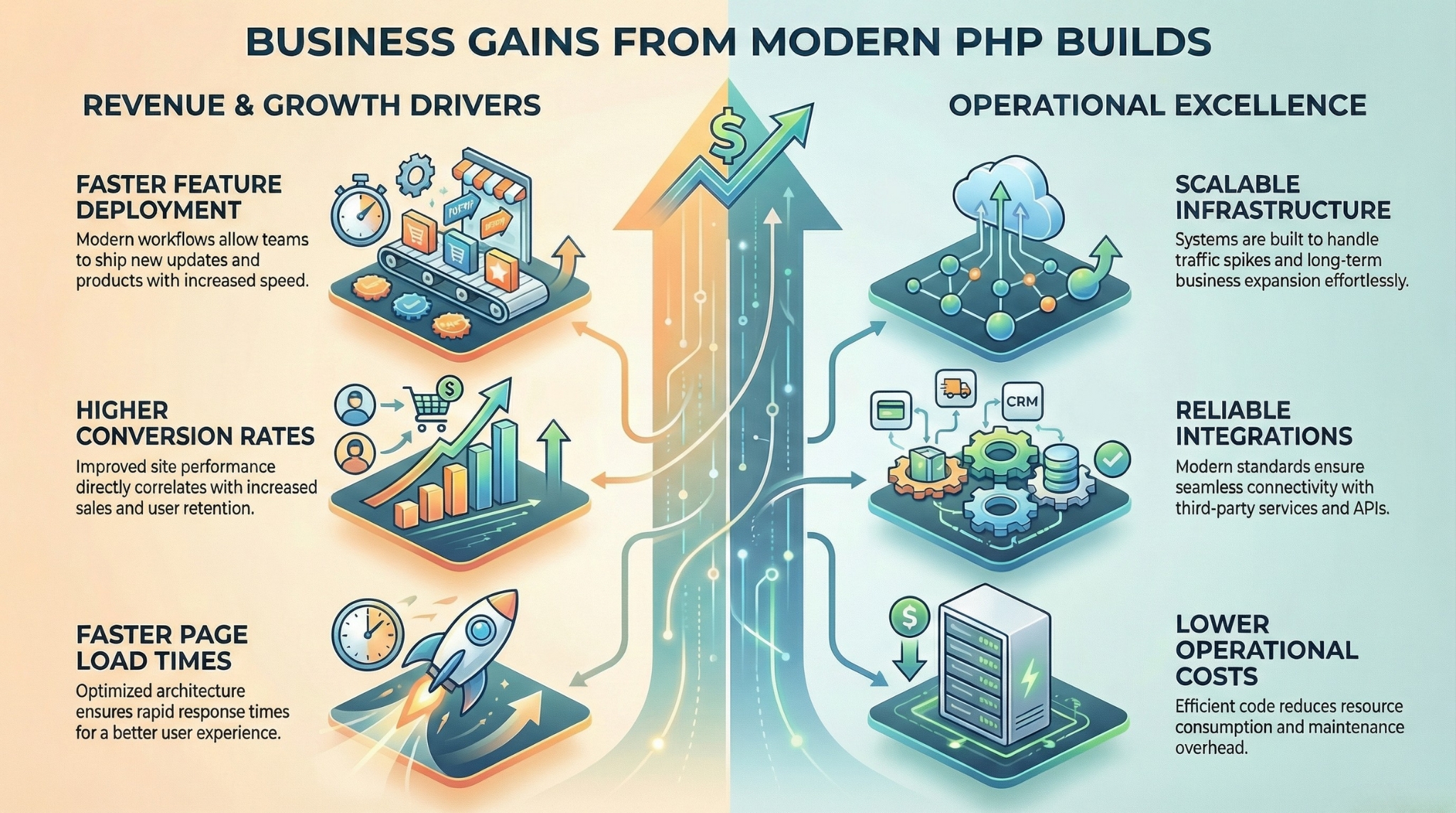
Organizations that modernize PHP systems typically report:
- Faster page loads and higher engagement
- Reduced cart abandonment
- Lower support tickets caused by system errors
- Faster feature deployment cycles
- Improved integration stability
These gains are not theoretical. They stem from removing friction points that previously blocked revenue flow.
Choosing the Right Custom PHP Development Approach
Not all PHP development delivers these results. Businesses should look for a Custom PHP development service that emphasizes:
- Performance benchmarking before and after development
- Clean, maintainable code standards
- API-first architecture planning
- Automation-driven workflows
- Long-term scalability, not short-term fixes
A rushed or template-driven build often recreates the same bottlenecks under a new interface.
FAQs
1. What causes revenue loss in PHP-based systems?
- Slow performance, inefficient backend logic, broken integrations, and manual processes are the most common causes.
2. How does PHP performance optimization improve conversions?
- Faster server response times reduce bounce rates and checkout friction, directly improving conversion rates.
3. When should a business consider PHP backend improvement?
- When adding features becomes slow, integrations fail often, or traffic growth causes instability.
4. How does the PHP API integration service help scaling businesses?
- It enables real-time data flow between systems, reduces manual work, and supports multi-platform expansion.
5. Can PHP-based business automation reduce operational costs?
- Yes. Automation lowers manual effort, minimizes errors, and speeds up transaction processing.
Conclusion: PHP Should Protect Revenue, Not Drain It
Modern PHP is not the problem; outdated implementation is. When built with performance, integration, and automation in mind, PHP becomes a powerful revenue enabler.
Businesses that invest in structured PHP modernization eliminate hidden bottlenecks, operate faster, and scale with confidence. The result is not just better code; it is measurable business growth supported by a backend that keeps up with demand.


