Premium brands tend to prioritize iPhone app development because the Apple ecosystem consistently attracts high-value users who are more willing to pay for quality experiences.
With stronger privacy controls, controlled hardware–software integration, and a curated App Store review process, iOS provides a trusted environment for both businesses and users. This trust directly impacts conversion rates, retention, and long-term revenue, making iOS the preferred platform for brands that target premium audiences.
Trust as a Conversion Factor on Mobile
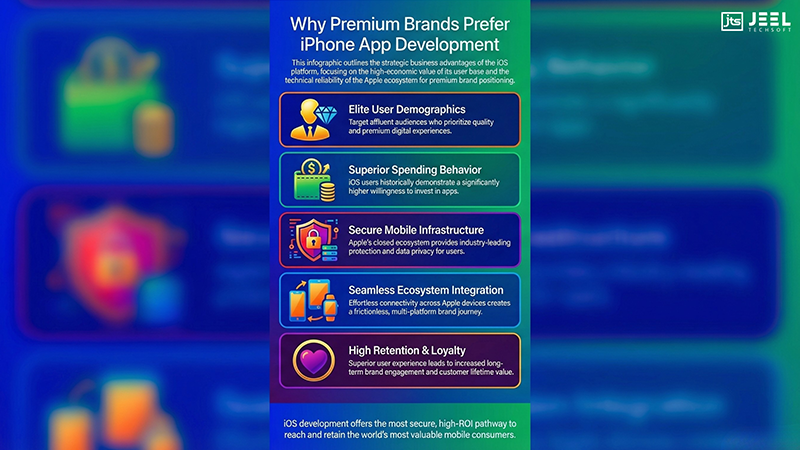
Premium brands tend to prioritize iPhone app development because the Apple ecosystem consistently attracts high-value users who are more willing to pay for quality experiences. With stronger privacy controls, controlled hardware–software integration, and a curated App Store review process, iOS provides a trusted environment for both businesses and users.
This trust directly impacts conversion rates, retention, and long-term revenue. When users feel confident about privacy, payment security, and app quality, they are far more willing to engage with premium digital services.
That is why many companies targeting high-value audiences invest early in iPhone app development services. They are not simply building an app; they are building a trusted environment where customers feel comfortable making purchases, storing personal data, and interacting with the brand.
On mobile platforms, trust becomes a conversion driver.
Users install dozens of apps but only keep a handful long term. Those that remain are the ones that consistently deliver reliability, security, and intuitive experiences.
The Apple ecosystem has built a reputation around these exact attributes. For businesses that rely on subscriptions, in-app purchases, or high-value transactions, this reputation translates directly into measurable outcomes:
- Higher conversion rates
- Stronger subscription retention
- Greater customer lifetime value
In short, when users trust the platform, they are more likely to trust the app.
Why iOS Users Behave Differently for Paid Products
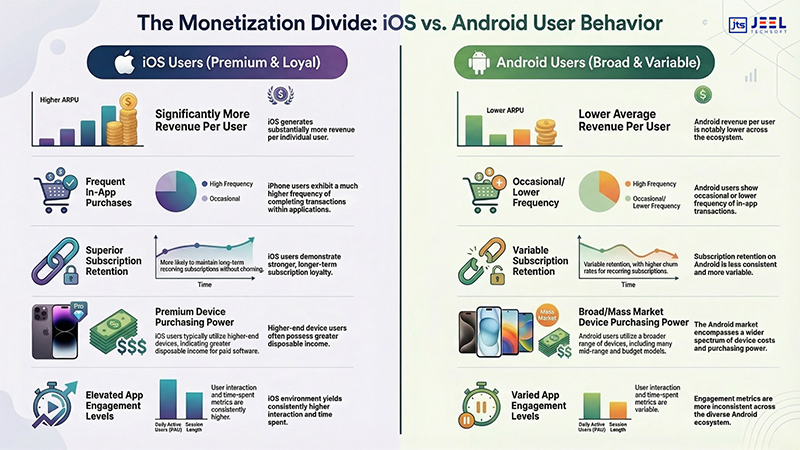
One of the clearest patterns in mobile commerce is that iOS users typically generate more revenue per user than Android users.
Industry reports from companies like Sensor Tower and Statista repeatedly show that although Android dominates global market share, Apple devices generate a disproportionate share of app revenue. Several behavioral factors explain this trend.
1. Higher purchasing intent
Apple users often enter the ecosystem through premium devices. The average iPhone costs significantly more than the average Android phone.
This purchasing behavior correlates strongly with willingness to pay for digital services.
As a result, many businesses launching subscription models such as learning platforms, productivity tools, and streaming services see stronger conversion rates among iOS audiences.
2. Ecosystem familiarity
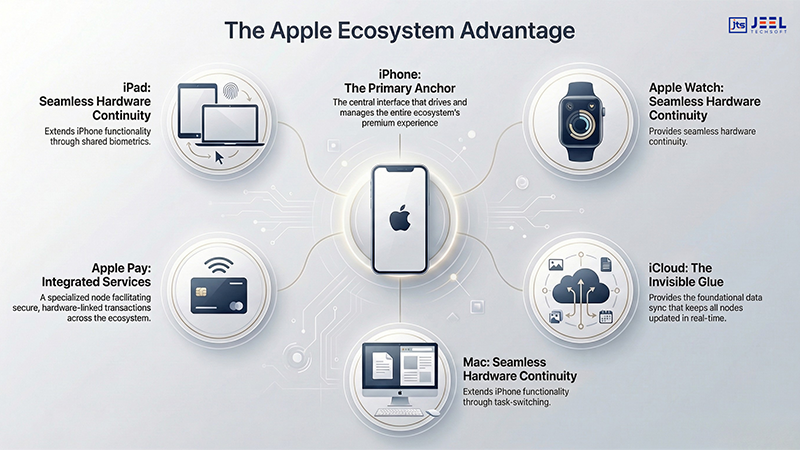
Users within the Apple ecosystem tend to rely heavily on Apple services such as:
- Apple Pay
- iCloud
- App Store subscriptions
- Apple ID authentication
This familiarity reduces friction during purchases. When payment methods and authentication systems are already trusted, users are more likely to complete transactions.
3. Design expectations
iOS users are accustomed to refined interface design and smooth interactions.
Applications that invest in strong UI UX design services often perform better on iOS because the user base expects clarity, speed, and visual consistency.
When the interface aligns with those expectations, engagement rises and churn drops.
4. Loyalty and retention
Apple’s hardware and software integration creates an environment where switching platforms requires effort.
For app developers, this leads to a more stable user base. Once users adopt an app within their Apple environment, they are more likely to keep using it across devices like iPhone, iPad, Mac, and Apple Watch. This multi-device continuity is a powerful retention driver.
Security and Privacy Strengths in iOS Apps
Security is not just a technical requirement for premium brands; it is a brand promise.
Companies handling payments, personal data, or confidential communications must protect users from breaches and misuse. That responsibility makes the iOS platform particularly attractive.
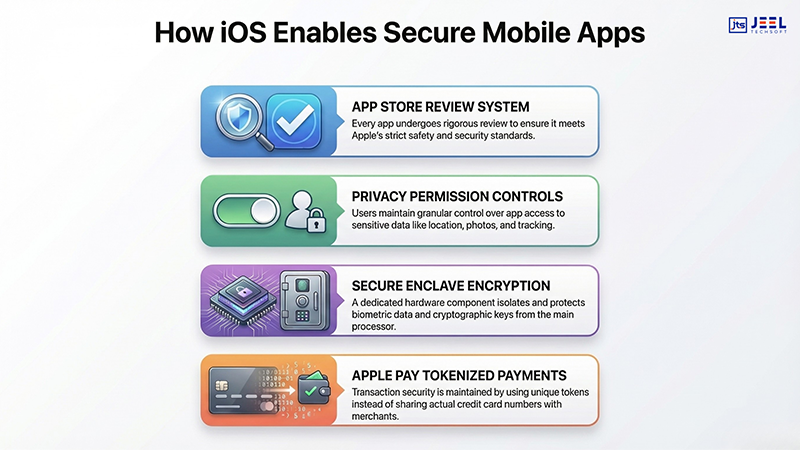
The architecture behind iOS supports the creation of secure mobile apps through several mechanisms.
App Store review process
Apple maintains a strict review process before any app is published.
Every application submitted to the App Store undergoes checks for:
- Malware or malicious code
- Privacy policy compliance
- Data collection transparency
- User experience standards
While this process sometimes slows release cycles, it significantly reduces the risk of unsafe applications reaching users.
For businesses, that controlled environment reinforces credibility.
Privacy frameworks
Apple has introduced multiple privacy frameworks that help developers build safer applications.
Examples include:
- App Tracking Transparency
- Secure Enclave hardware encryption
- Permission-based access to user data
These frameworks ensure that users have clear visibility into how their information is used.
For premium brands, this transparency strengthens customer relationships.
Hardware–software integration
Unlike fragmented Android environments, Apple controls both hardware and software.
This tight integration allows developers to build optimized applications with predictable performance and stronger protection against vulnerabilities.
Organizations building high-stakes products such as fintech wallets or healthcare platforms often rely on specialized mobile app development services that focus on the Apple environment for precisely this reason.
Encrypted payment infrastructure
Apple Pay has become a trusted payment mechanism in many markets.
Transactions use tokenization rather than sharing card details directly with apps, significantly reducing risk.
For subscription businesses, this streamlined payment process can improve conversion rates while maintaining strong security.
Roadmap MVP to App Store Readiness
Building an iOS product that earns user trust requires more than coding.
A structured development roadmap ensures the application moves from concept to App Store approval smoothly.
Below is a simplified progression commonly followed by teams working with experienced iPhone app development specialists.
1. Product discovery and audience validation
Before writing code, teams define:
- Core user problem
- Target audience profile
- Monetization strategy
Premium apps often focus on niche audiences with clear purchasing intent.
2. MVP architecture planning
The minimum viable product (MVP) stage prioritizes essential features while maintaining high design standards.
For iOS apps, this includes:
- Secure authentication flows
- Payment integration
- Core user workflows
- Scalable backend architecture
Even at the MVP stage, the application should reflect the brand’s quality standards.
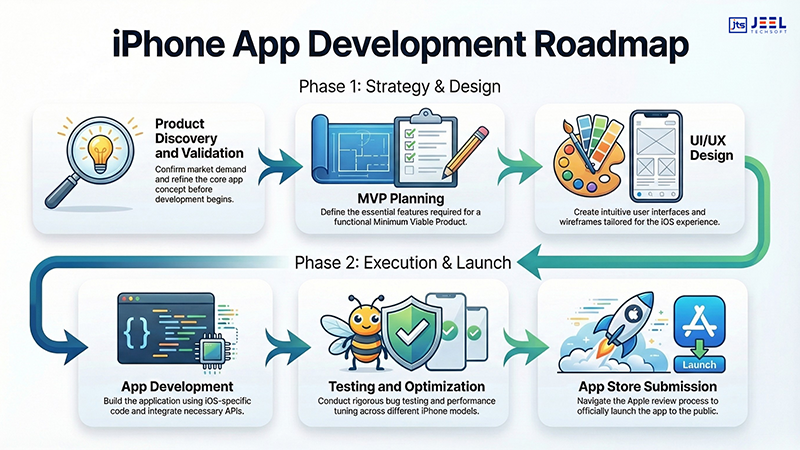
3. Interface and experience design
Design is a critical step in iOS development. The interface must follow Apple’s Human Interface Guidelines while maintaining brand identity.
This stage often involves close collaboration between developers and teams specializing in UI UX design services.
4. Development and testing
The coding phase includes:
- Swift-based application development
- API integration
- Device compatibility testing
- Performance optimization
Testing across multiple Apple devices ensures consistent behavior.
5. App Store submission
Before approval, Apple requires:
- Privacy policy compliance
- Proper app metadata
- Accurate feature descriptions
Developers can review official guidelines from the Apple iPhone developer documentation. A well-prepared submission significantly reduces rejection risk.
FAQ Section
Why choose iPhone apps for business products?
- iPhone applications often attract users with higher purchasing intent and stronger engagement levels. The Apple ecosystem provides a secure environment, trusted payment systems, and a loyal user base that supports premium digital products.
How long does iOS approval take?
- Most apps are reviewed within 24–48 hours, though complex applications or updates with new features may take longer, depending on Apple’s review queue and compliance checks.
What drives iOS app development cost?
- The cost depends on factors such as feature complexity, design requirements, backend infrastructure, security integration, and the experience level of the development team providing iPhone app development services.
Are iOS apps more secure than those on other platforms?
- The iOS platform uses strict app review policies, hardware-based encryption, and privacy-focused frameworks. These elements make it easier for developers to create secure mobile apps that meet enterprise security standards.
Conclusion
Premium brands rarely choose technology platforms by accident. Their decisions revolve around audience behavior, security expectations, and long-term retention. The Apple environment checks all three boxes.
Through iPhone app development, businesses gain access to a user base that values quality, spends more within apps, and stays loyal when experiences remain consistent.
At the same time, the security infrastructure of the Apple ecosystem supports the creation of secure mobile apps capable of handling payments, sensitive data, and subscription services without compromising trust.
For brands targeting high-value customers, this combination of trust, security, and user loyalty helps explain why iOS remains the preferred platform for mobile innovation.


