
The first few weeks after launching an iOS app often determine whether it grows or disappears. Early ratings influence App Store visibility, user trust, and download momentum.
Apps that ignore iPhone app optimization, stability testing, and proper crash management frequently receive poor reviews that suppress rankings before marketing efforts even begin. Avoiding technical errors, prioritizing user experience, and having a structured recovery plan are essential to maintaining healthy ratings and long-term growth.
Why early ratings decide long-term success
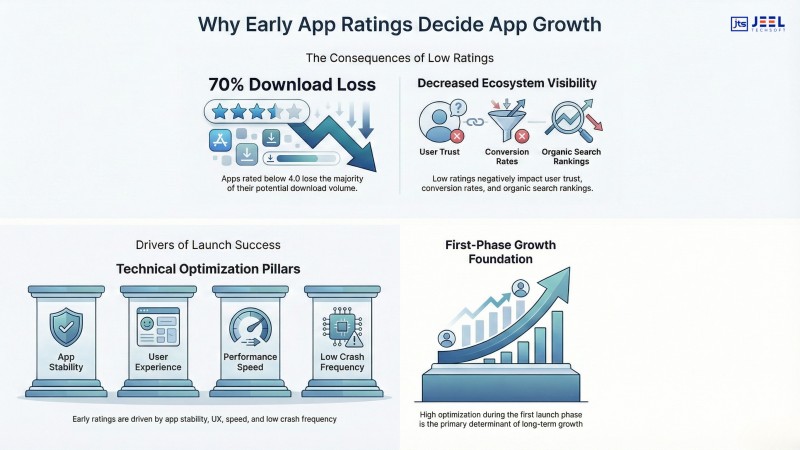
When an iPhone application launches, the App Store algorithm immediately begins collecting behavioral signals. These signals include ratings, reviews, uninstall rates, crash frequency, and session length.
Many developers assume marketing drives growth first. In reality, ratings and stability determine whether growth is even possible. A few early one-star reviews can quietly limit visibility.
Research from AppFollow and StoreMaven suggests apps with ratings below 4.0 lose up to 70% of potential downloads, even when users discover them through search results.
This is why iPhone app optimization during the early release phase matters far more than many teams realize.
Users judge quickly. If the experience feels unstable, confusing, or slow, they rarely wait for updates; they leave a negative review. Once that happens, rebuilding trust becomes significantly harder.
The good news: most rating problems originate from predictable development mistakes that can be prevented.
Technical mistakes that cause poor reviews
Many low ratings originate not from poor ideas, but from technical issues that should have been resolved before launch.
Below are the most common problems that damage App Store perception.
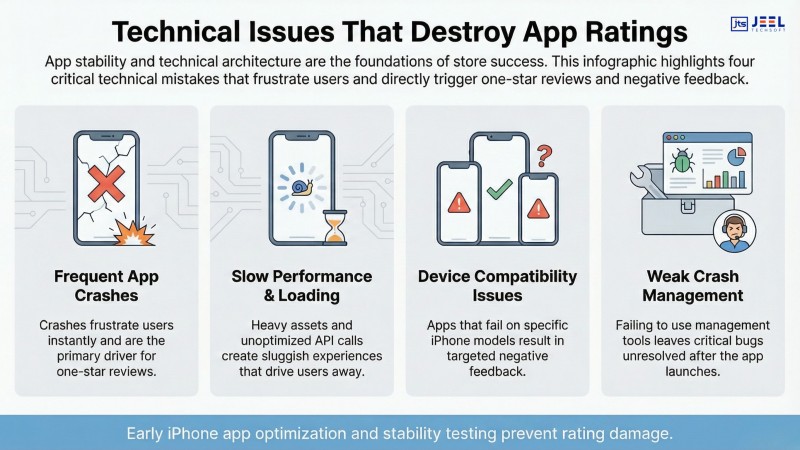
1. Poor crash management
Nothing frustrates users faster than an app that crashes unexpectedly.
If the application fails during login, checkout, or onboarding, users immediately assume the product is unreliable.
Strong crash management should include:
- Real-time crash monitoring tools (Firebase Crashlytics, Sentry)
- Beta testing with TestFlight before public release
- Automatic crash reporting with detailed stack traces
- Immediate patch releases when critical failures appear
Apps that actively monitor crashes during early deployment recover much faster because issues are detected within hours instead of weeks.
2. Weak performance optimization
iOS users expect speed.
Slow load times or freezing screens often lead to harsh reviews, such as:
“App takes forever to open.”
“Completely unusable.”
Performance issues usually come from:
- Heavy image assets
- Unoptimized API calls
- Blocking UI threads
- Poor memory management
A strong iPhone app optimization strategy should include load-time testing across multiple devices and iOS versions. Even a one-second delay can noticeably affect user satisfaction.
3. Insufficient device compatibility testing
Many development teams test on only one or two devices.
However, iPhone users run apps on a wide range of screen sizes and iOS versions.
Problems appear when:
- UI breaks on smaller screens
- Layout shifts on newer iPhones
- Features behave differently across OS versions
Compatibility testing across devices dramatically reduces unexpected bugs.
Professional teams typically validate builds on 10–15 device configurations before launch.
4. Poor update discipline
Apps often launch with unresolved bugs because teams plan to “fix them in the next version.”
Users rarely forgive that approach. A negative review posted during the first week often stays visible permanently.
Consistent update cycles, especially during the first month, show users the product is actively maintained.
This is why companies frequently rely on professional iPhone app development services to maintain strong development standards before and after launch.
UX choices that frustrate users
Technical stability is essential, but poor user experience can damage ratings just as quickly.
Even a perfectly coded app will struggle if users feel confused or blocked.
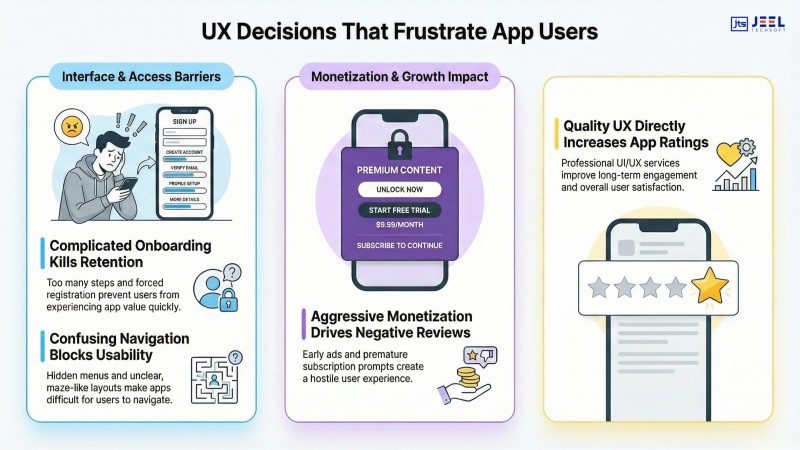
1. Complicated onboarding
Users should understand the value of the app within seconds.
Common onboarding mistakes include:
- Too many tutorial screens
- Forced account creation before exploration
- Long permission requests immediately on launch
A smoother approach allows users to explore first and request permissions only when necessary.
2. Hidden navigation
Navigation problems often appear when design prioritizes creativity over usability. Users expect familiar patterns. When navigation becomes unpredictable, frustration grows quickly.
Common issues include:
- Important features hidden behind multiple menus
- Inconsistent navigation icons
- Overloaded home screens
Investing in professional UI UX design services can dramatically improve clarity and engagement.
A well-structured interface reduces support tickets, improves session length, and increases ratings.
3. Aggressive monetization
Nothing drives negative reviews faster than intrusive monetization.
Examples include:
- Full-screen ads during onboarding
- Paywalls before users understand the product
- Forced subscription prompts
Successful apps typically delay monetization until users experience clear value. Trust must come before conversion.
Recovery plan after a bad launch
Even well-planned apps sometimes receive poor early ratings. The key is responding quickly and strategically.
A structured recovery plan can gradually restore credibility.
Step 1: Identify root causes
Analyze review patterns.
Look for repeated complaints such as:
- Crashes
- Login failures
- Confusing navigation
- Slow loading
User feedback often points directly to the biggest problems.
Step 2: Prioritize stability updates
Fix technical issues before introducing new features.
Improved stability often leads to better ratings within weeks.
This stage heavily depends on strong crash management, monitoring, and rapid debugging. Many companies rely on dedicated app maintenance services to keep performance stable after launch.
Step 3: Encourage satisfied users to review
Once issues are resolved, encourage happy users to share feedback.
Effective strategies include:
- Review prompts after successful actions
- In-app feedback requests after positive engagement
- Email reminders to active users
Positive reviews gradually balance earlier negative feedback.
Step 4: Maintain consistent updates
Regular improvements signal reliability.
Apps that release updates every few weeks often regain credibility faster than those with long development gaps.
FAQs
Why do ratings drop for newly launched apps?
- Ratings typically drop due to technical instability, slow performance, confusing navigation, or aggressive monetization. Early users expect smooth functionality, and unresolved issues quickly lead to negative reviews that influence other potential users.
How to recover ratings after a bad launch?
- Start by identifying the issues mentioned in reviews, prioritizing stability fixes, improving user experience, and releasing frequent updates. Encourage satisfied users to leave feedback once improvements are made.
How important is crash management for App Store success?
- Effective crash management helps detect technical failures early and resolve them quickly. Apps that actively monitor crashes maintain higher stability and avoid the negative reviews that often follow repeated crashes.
What role does iPhone app optimization play in growth?
- Strong iPhone app optimization improves performance, compatibility, and usability. Optimized apps load faster, operate smoothly across devices, and deliver better user experiences, factors that directly influence App Store ratings and downloads.
Conclusion
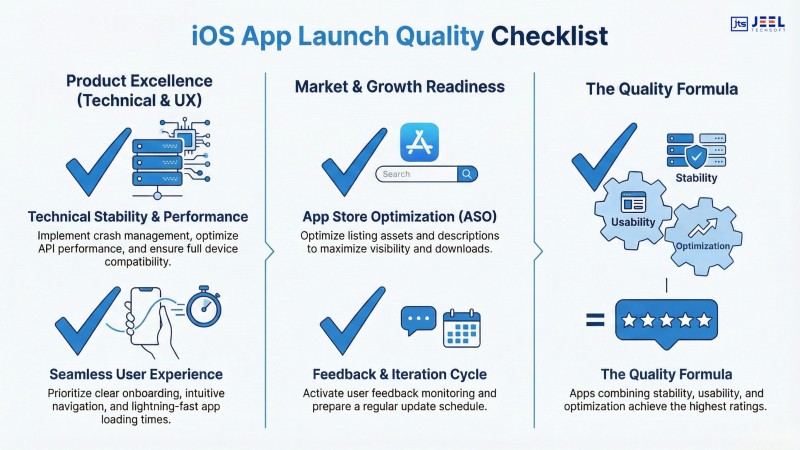
The success of an iOS application often depends on what happens during the first few weeks after launch. Early ratings influence visibility, user trust, and download momentum. Technical stability, thoughtful UX design, and disciplined maintenance practices prevent many of the problems that lead to poor reviews.
Teams that prioritize iPhone app optimization, proactive crash management, and consistent updates create a far stronger foundation for long-term growth.
The difference between an app that disappears and one that scales often comes down to the quality discipline applied before and immediately after release.


