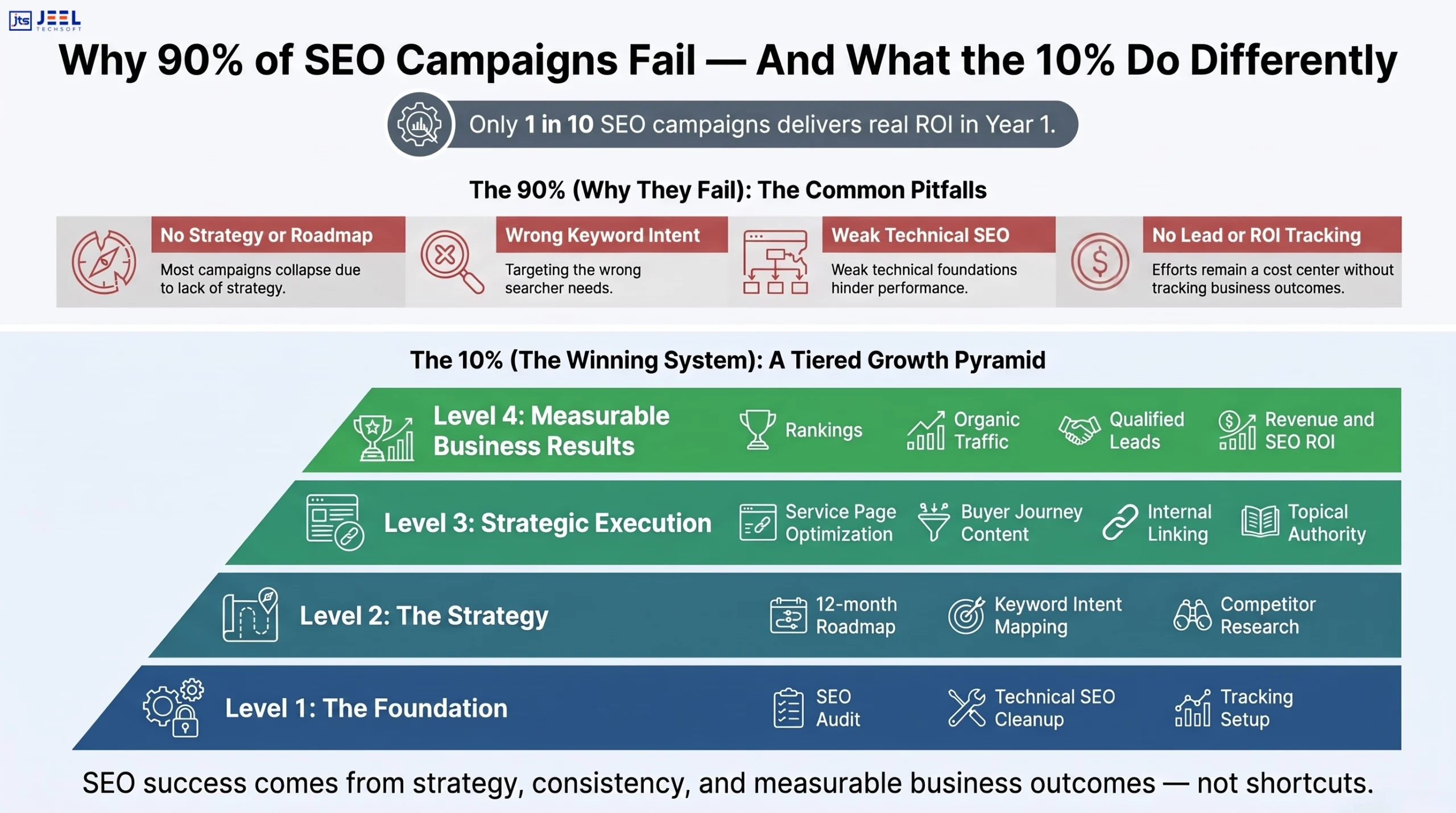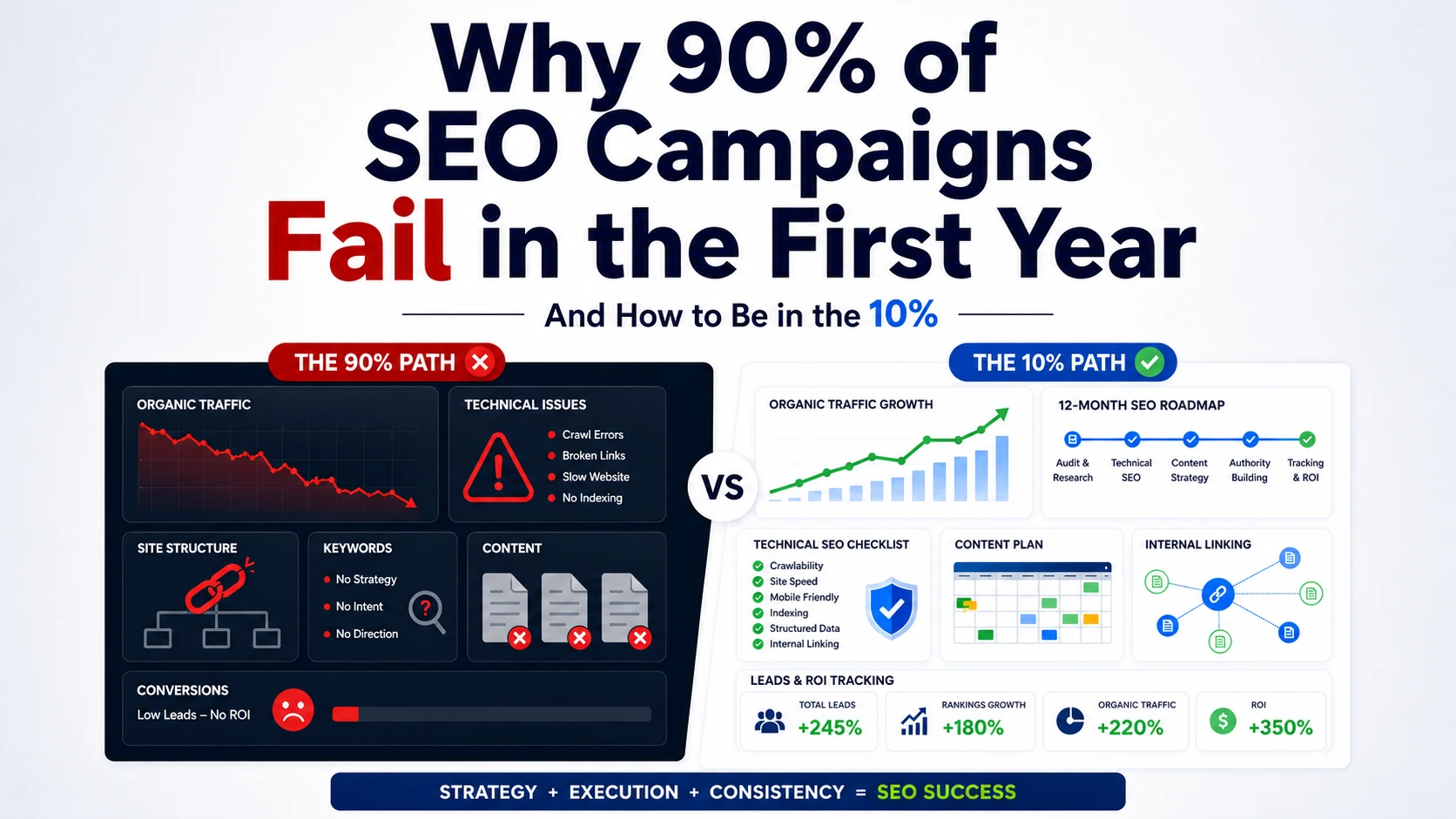
Many SEO campaigns fail in the first year, not because SEO does not work, but because the campaign starts with weak planning, wrong keyword targeting, poor technical foundations, thin content, unrealistic timelines, and no clear way to measure leads or revenue.
The businesses that win with SEO usually treat it as a growth system: they audit first, build a 12-month roadmap, fix technical SEO issues, create content around buyer intent, improve internal linking and track SEO ROI properly.
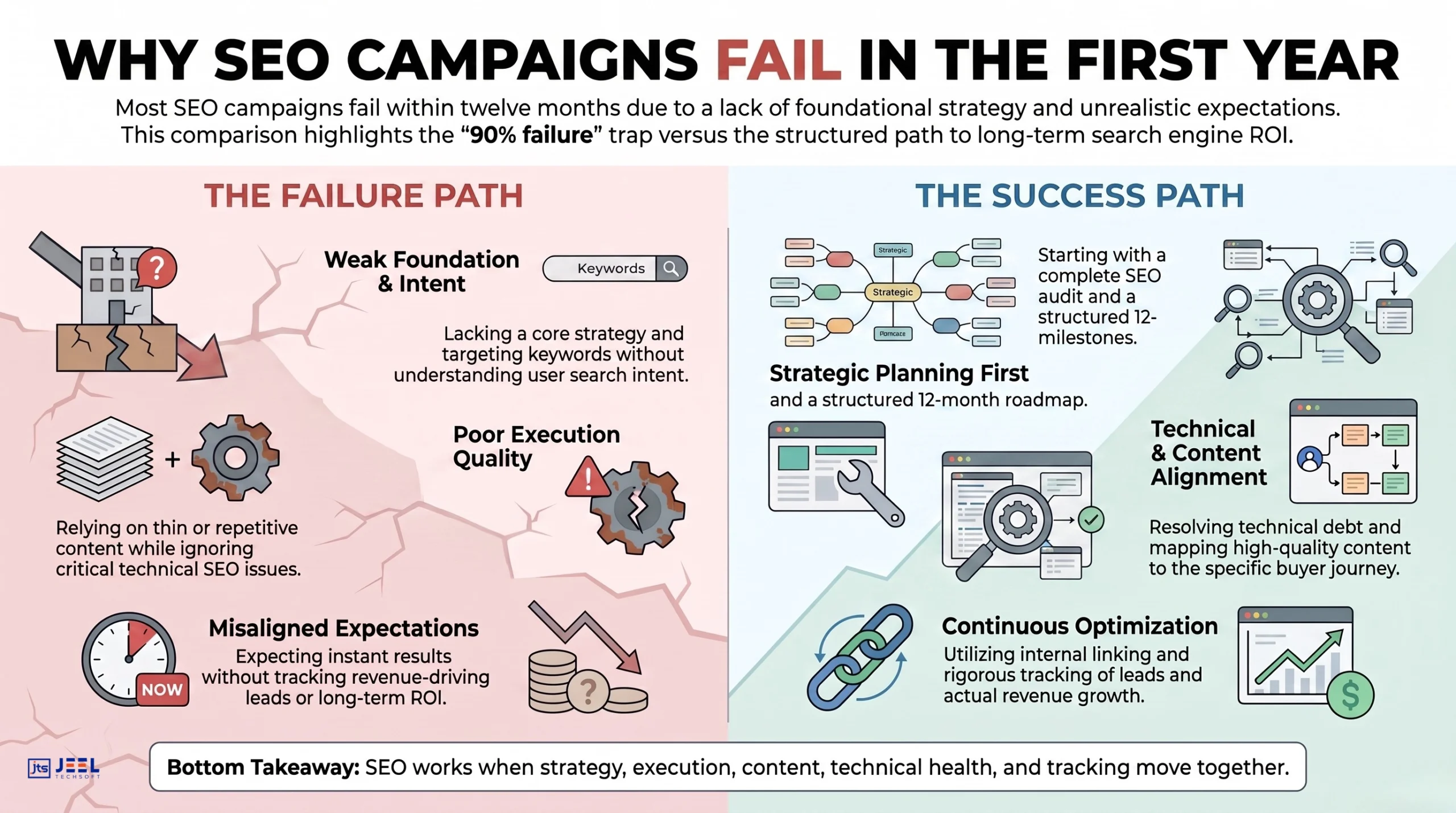
Why Most SEO Campaigns Struggle in the First Year
SEO is often sold as a traffic channel, but it should be managed as a business growth channel. That difference matters.
A business may hire a search engine optimization company, publish a few blogs, build some backlinks, and expect steady leads within three months. When that does not happen, SEO gets blamed. In reality, the campaign may have started without enough research, tracking, technical cleanup, or content depth.
Google’s own SEO guidance focuses on helping search engines crawl, index, and understand a website properly, not just on adding keywords to pages. That means SEO success depends on how well your website, content, structure, and user experience work together.
The first year is when most campaigns expose their weaknesses. If the foundation is poor, adding more content or backlinks only increases waste.
The Biggest Reason SEO Fails Is Weak Strategy
Most SEO failures are strategy failures before they are execution failures.
A proper seo strategy should answer clear questions:
- Who are we targeting?
- What search intent matters?
- Which pages should generate leads?
- Which keywords are realistic?
- What technical issues are blocking growth?
- How will we measure revenue impact?
Without those answers, SEO becomes a random activity.
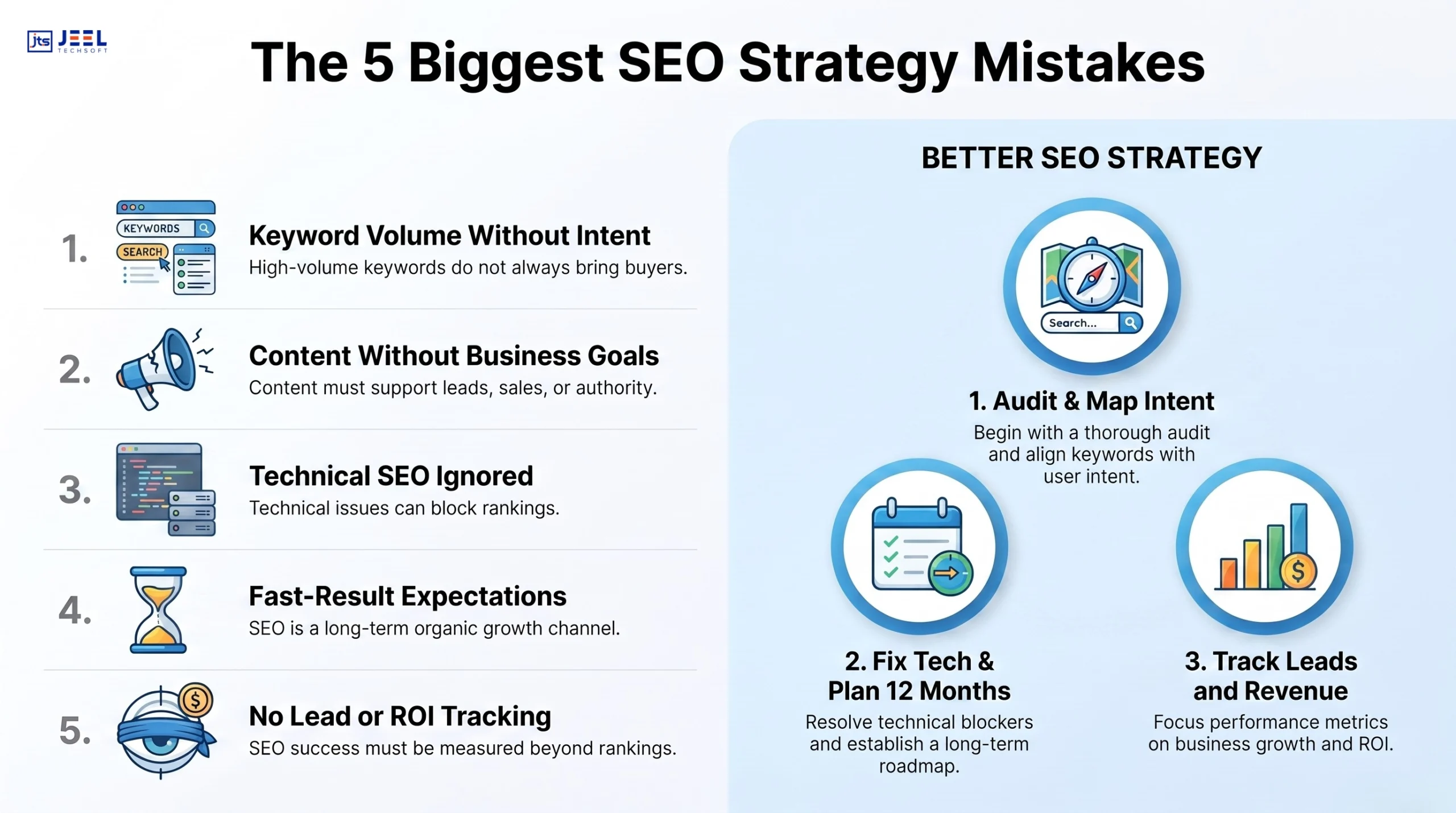
Targeting Keywords Without Understanding Intent
A keyword with high search volume does not always mean high business value.
For example, a company offering accounting software may target “accounting tips” because it has search volume. But users searching for that term may only want basic education, not software. A better keyword might be “best accounting software for small business” or “cloud accounting software for agencies” because the intent is closer to purchase.
This is where many campaigns fail. They chase keywords without asking what the searcher wants next.
A strong search engine optimization service should map keywords into intent groups such as informational, comparison, commercial, and transactional. That helps you create pages that match the buyer journey instead of only chasing traffic.
Publishing Content Without a Clear Business Goal
Content without a business goal is just activity.
Many websites publish weekly blogs but never connect those blogs to service pages, lead magnets, product demos, or sales conversations. A blog may rank, but if it does not guide users toward the next step, it will not support seo for business growth.
Every content piece should have a job. Some blogs should educate. Some should build authority. Some should support sales. Some should push users toward a consultation, quote request, audit, or product page.
For example, a blog on “technical SEO checklist” should internally link to a technical SEO audit page. A blog on “SEO cost for small businesses” should link to your search engine optimization service page.
Ignoring Technical SEO Problems
Technical SEO is often the hidden reason content does not perform.
A website may have strong blogs, but if pages are slow, not indexed, poorly structured, duplicated, or difficult to crawl, rankings can suffer. Google recommends making links crawlable so search engines can discover pages and understand page relationships.
Common technical issues include broken internal links, missing canonical tags, slow mobile pages, duplicate metadata, poor Core Web Vitals, weak URL structure, and blocked pages in robots.txt.
Core Web Vitals measure real-world user experience across loading performance, interactivity, and visual stability. Google recommends that site owners aim for good Core Web Vitals for better user experience and Search performance.
Expecting Fast Results From a Long-Term Channel
SEO is not a 30-day lead machine. It is a compounding channel.
In most cases, the first few months involve audits, fixes, content planning, page optimization, and early publishing. Real movement often takes longer, especially in competitive industries.
That does not mean you should wait blindly for a year. You should see leading indicators: better indexing, improved keyword visibility, stronger impressions, higher engagement, more ranking pages, and early lead movement.
If nothing improves after consistent execution, the strategy needs review.
Common SEO Mistakes That Waste Budget
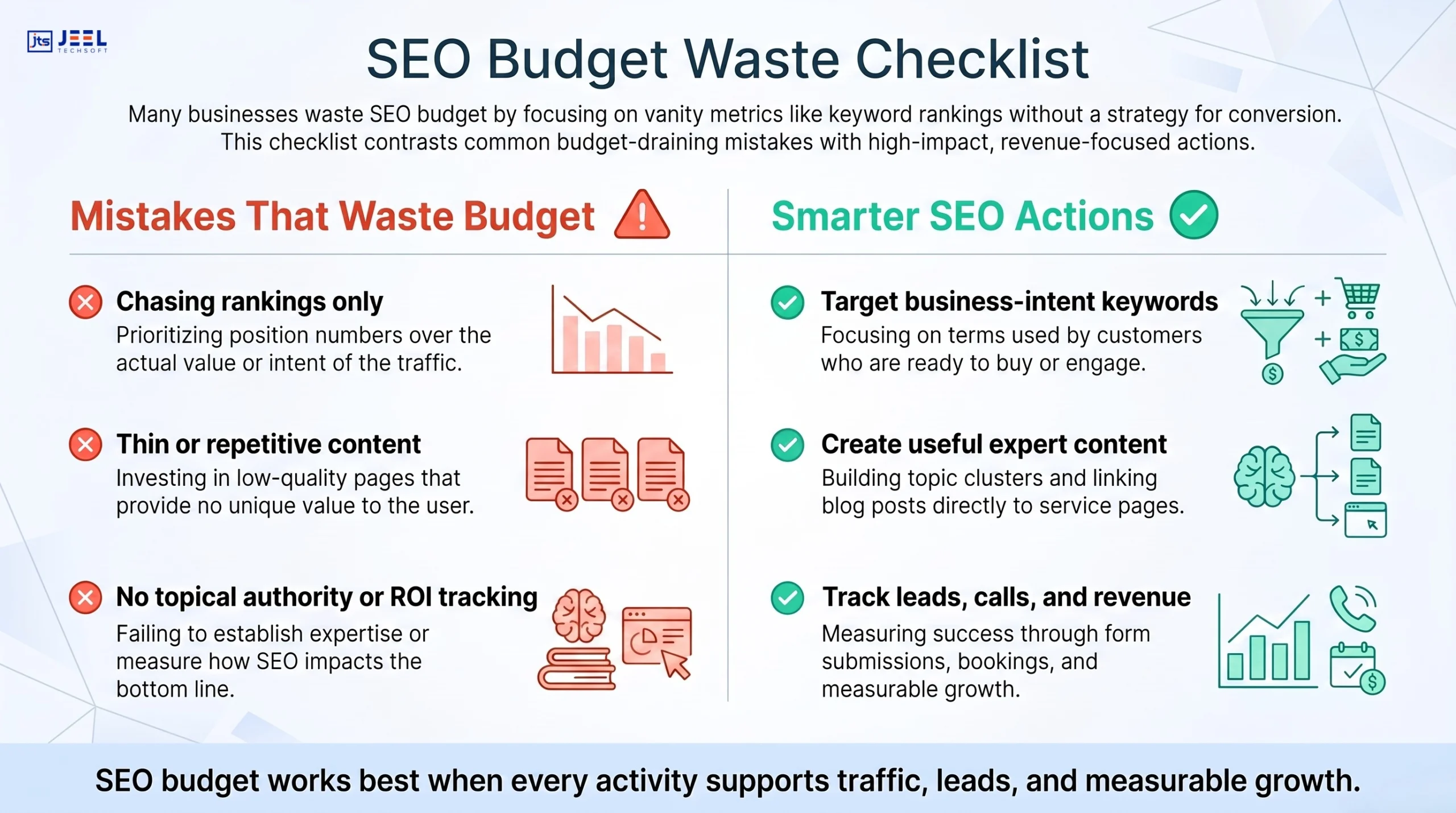
SEO budget is not wasted only by bad agencies. It is also wasted by unclear goals, poor internal coordination, and measuring the wrong things.
Chasing Rankings Instead of Revenue
Ranking number one for a low-intent keyword may look good in a report, but it may not help sales.
A business should track rankings, but rankings alone are not enough. Better metrics include qualified organic leads, assisted conversions, demo requests, calls, form submissions, pipeline value, and SEO ROI.
The real question is not “Did we rank?”
The better question is, “Did this ranking help the business grow?”
Creating Thin or Repetitive Content
Thin content is one of the fastest ways to weaken an SEO campaign.
If every blog repeats the same basic advice, the website does not build real authority. For example, writing ten similar blogs around “benefits of SEO” will not perform as well as building a useful content cluster around SEO audits, local SEO, technical SEO, content strategy, link building, SEO ROI, and industry-specific SEO challenges.
Good content should add examples, steps, comparisons, mistakes, checklists, and decision-making guidance.
Not Building Topical Authority
Topical authority means your website covers an important subject deeply enough that users and search engines can trust it.
For example, a healthcare clinic should not only publish one blog about “back pain treatment.” It may also need supporting content around symptoms, causes, treatment options, recovery timelines, prevention tips, physiotherapy support, and when to see a specialist.
The same applies to a software company, legal firm, eCommerce brand, real estate business, or local service provider. One page rarely builds enough trust on its own. Search engines need to see a connected group of useful pages that answer related questions clearly.
That is how SEO organic growth becomes stronger over time. Instead of depending on one or two ranking pages, the website starts building authority across a full topic area.
Poor Internal Linking and Site Structure
Internal linking helps users and search engines understand which pages matter most.
If your best service pages are buried three or four clicks deep, or your blogs do not link to money pages, you are making SEO harder than it needs to be. Google explains that links help it discover pages and understand relevance.
A practical structure could look like this:
- Home page → SEO services page → Technical SEO page → Supporting technical SEO blogs
- Home page → Local SEO page → GMB audit for local SEO blog → Location pages
This creates a clear path for users and search engines.
No Clear Tracking for Leads and ROI
If tracking is weak, you cannot know whether SEO is working.
At a minimum, businesses should track organic form submissions, phone clicks, WhatsApp clicks, booking requests, newsletter signups, quote requests, and assisted conversions. For local businesses, Google Business Profile actions should also be reviewed because Business Profiles help customers find and contact businesses on Search and Maps.
Without proper tracking, SEO decisions become emotional. With tracking, you can decide what to improve, pause, scale, or remove.
What Successful SEO Campaigns Do Differently
The top 10% of SEO campaigns usually have one thing in common: they are managed like a long-term growth program, not a checklist.
They Start With a Complete SEO Audit
A proper audit should cover technical SEO, content quality, keyword gaps, backlinks, competitors, analytics, conversion paths, and local visibility if relevant.
For a local business, this should include a GMB audit for local seo: business categories, services, reviews, photos, NAP consistency, local landing pages, and competitor map visibility.
The audit should end with priorities, not just a long list of errors.
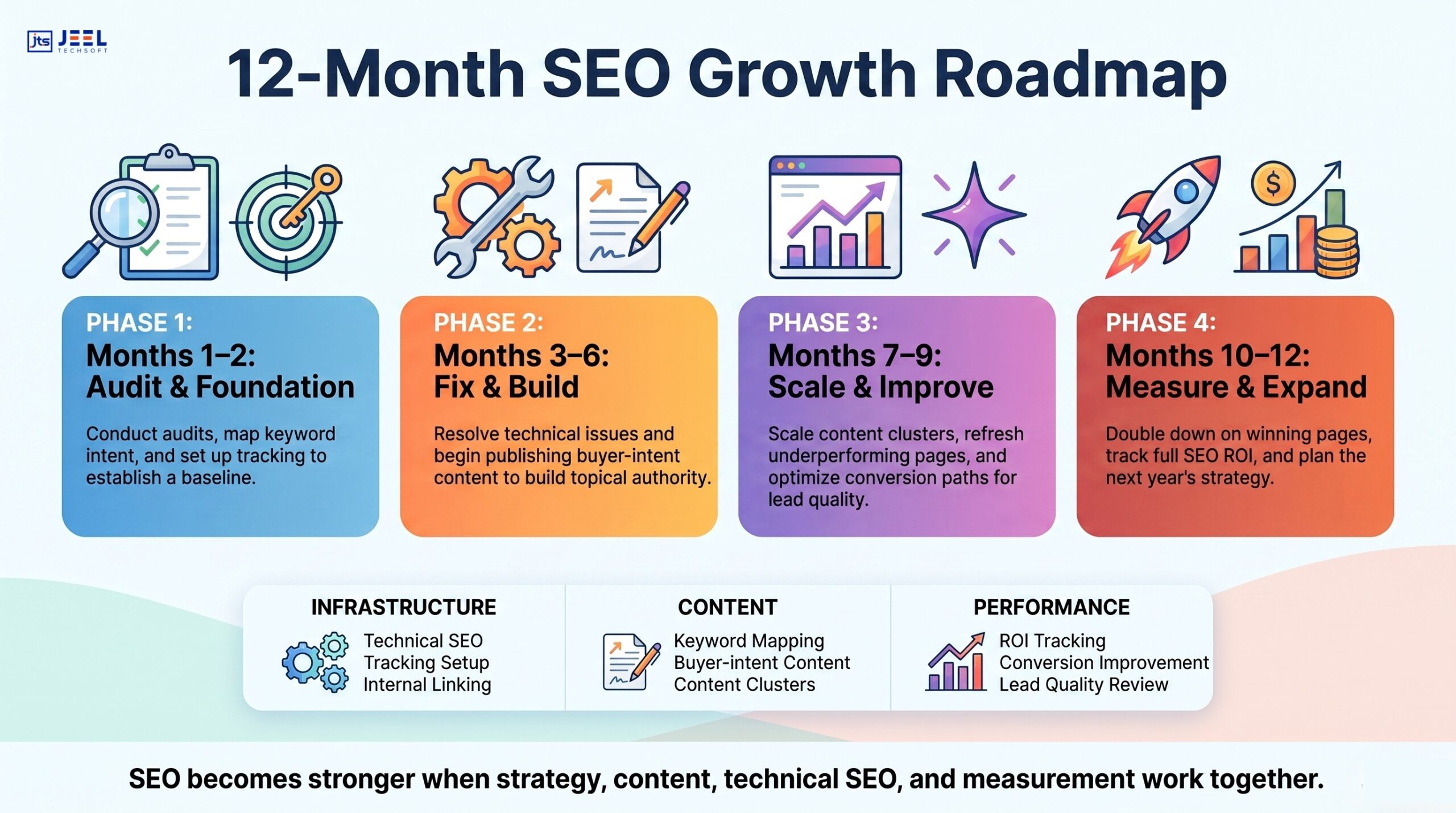
They Build a 12 Month SEO Roadmap
A 12-month roadmap gives the campaign direction.
Months 1–2 may focus on audits, tracking, technical fixes, and keyword mapping. Months 3–6 may focus on content creation, page optimization, internal linking, and authority building. Months 7–12 may focus on scaling what works, refreshing old pages, improving conversion rates, and expanding into new keyword clusters.
This is what a real seo growth strategy looks like.
They Match Content With Buyer Journey Stages
Not every visitor is ready to buy. Some are only trying to understand their problem. Some are comparing options. Some are ready to contact a provider.
That is why successful SEO campaigns do not create content randomly. They map content to each stage of the buyer journey.
For example, a healthcare clinic may target:
Top funnel: “Common causes of back pain”
Middle funnel: “Physiotherapy vs pain medication for back pain”
Bottom funnel: “Book a back pain physiotherapy consultation”
A software company may target:
Top funnel: “Why businesses struggle with manual reporting”
Middle funnel: “Best reporting automation tools for growing teams”
Bottom funnel: “Request a demo for reporting automation software”
A home service business may target:
Top funnel: “Signs your home needs professional pest control”
Middle funnel: “DIY pest control vs professional pest control”
Bottom funnel: “Pest control service near me”
This is how SEO becomes more useful for business growth. The content not only brings visitors. It guides the right people from awareness to decision.
They Fix Technical Issues Before Scaling Content
Publishing more content on a technically weak website is like pouring water into a leaking bucket.
Before scaling content, fix crawl errors, slow pages, duplicate URLs, poor mobile experience, broken links, missing schema, and weak page hierarchy.
Technical SEO does not always look exciting, but it often creates the conditions needed for content to perform.
They Measure Rankings, Traffic, Leads and Revenue
Successful SEO teams do not rely on one metric.
They review keyword movement, impressions, clicks, organic sessions, engagement, conversions, lead quality, assisted revenue, and SEO ROI. They also separate branded and non-branded traffic because branded growth and discovery growth tell different stories.
The best SEO growth partners report what matters to business owners, not just what looks good on a dashboard.
How to Be in the 10% That Actually Wins With SEO
To be in the group that wins, stop treating SEO as a monthly activity and start treating it as a growth system.
Start with an honest audit. Build a roadmap. Choose keywords based on intent, not only search volume. Fix technical issues before scaling content. Build topical authority with useful, specific content. Improve internal links. Track leads and revenue. Review performance monthly and adjust based on evidence.
Also, be patient without being passive.
SEO takes time, but your campaign should still show progress. If six months pass with no technical improvement, no content traction, no keyword growth, no lead tracking, and no strategic review, the problem is not SEO. The problem is how SEO is being managed.
A good search engine optimization service should bring clarity, not confusion.