
Modern Android users expect apps that are fast, intuitive, secure, and adaptable to their lifestyle, not just functional.
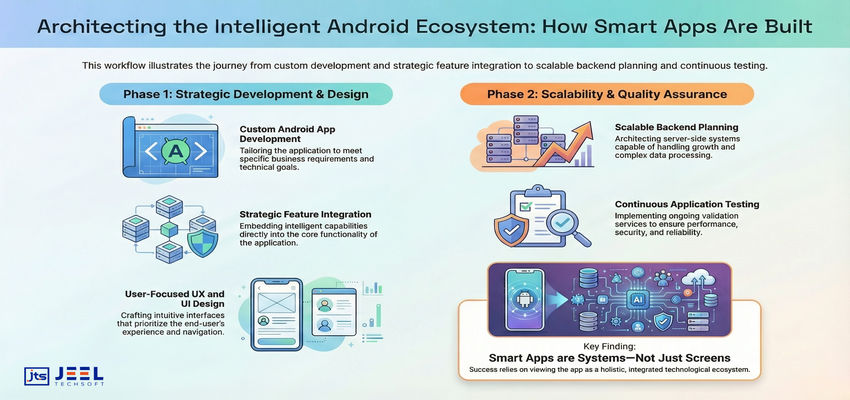
Meeting these expectations requires a strategic approach that combines thoughtful Android UX and UI design, precise Android feature integration service, strong Android app scalability planning, and rigorous Android application testing service.
Businesses that invest in a custom Android app development service aligned with real user behavior consistently outperform competitors relying on generic or outdated builds.
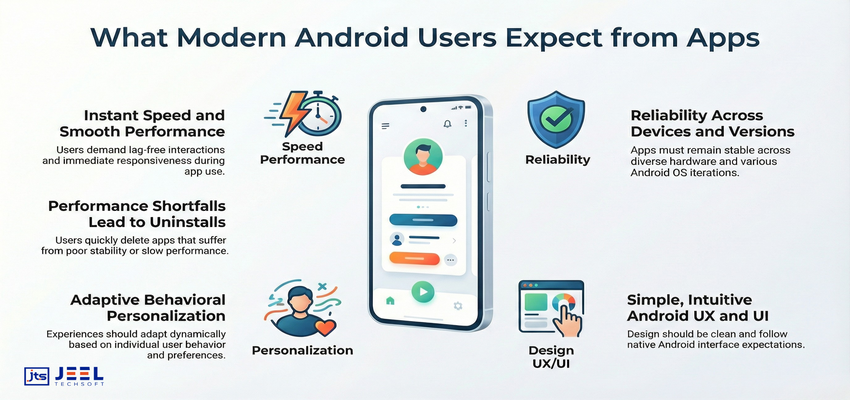
The Shift in Android User Expectations
Android is no longer a fragmented, experimental platform. It has matured into a performance-driven ecosystem where users compare apps across speed, polish, reliability, and relevance.
Today’s Android users are not forgiving. They abandon apps quickly when experiences feel slow, cluttered, or unreliable.
According to data published by Google, over 53% of users uninstall an app within the first 30 days if it fails to meet expectations around usability or performance.
This shift has changed how Android products must be built. Success now depends on understanding what users value and engineering apps to deliver it consistently.
What Modern Android Users Actually Want
Speed Without Compromise
Performance is no longer “nice to have.” Users expect apps to load instantly, respond smoothly, and operate efficiently even on mid-range devices.
Key expectations include:
- Launch times under two seconds
- Smooth transitions between screens
- Minimal background battery and data usage
Meeting these benchmarks requires more than clean code. It demands optimized architecture, efficient API handling, and device-level performance tuning, all core elements of a professional custom Android app development service.
Simple, Familiar, Yet Purposeful Design
Modern users prefer interfaces that feel intuitive without being generic. Good Android UX and UI design balances familiarity with clarity.
Effective Android design today focuses on:
- Predictable navigation patterns
- Clear visual hierarchy
- One-handed usability for larger screens
- Dark mode and accessibility support
Apps that overload screens with features often lose engagement. Users prefer apps that guide them, not overwhelm them.
Personalization That Feels Natural
Users now expect apps to adapt to them, not the other way around.
This includes:
- Context-aware notifications
- Personalized content feeds
- Smart defaults based on usage behavior
Achieving this level of relevance requires precise Android feature integration service planning, combining system APIs, user data logic, and backend intelligence in a way that respects performance and privacy.
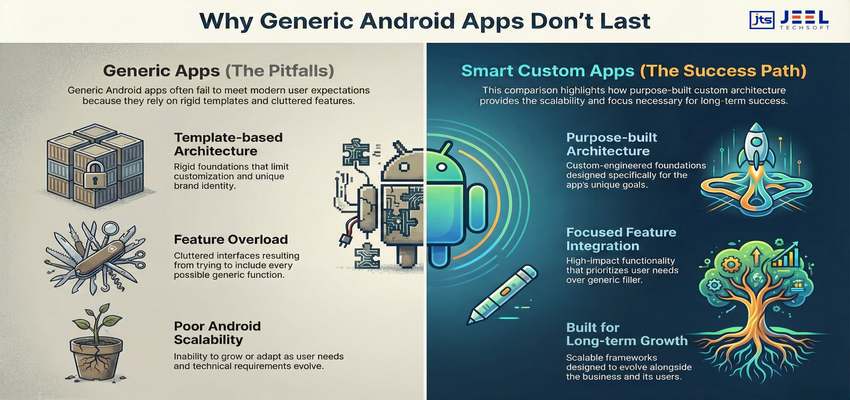
Why Generic Apps Fail Modern Android Users
Many Android apps fail not because of a lack of features, but because of poor alignment with user reality.
Common failure points include:
- Bloated builds are trying to serve all users at once
- Inconsistent UI patterns across screens
- Poor performance on non-flagship devices
- Limited scalability as usage grows
Template-based development often leads to rigid architectures that struggle to evolve. As user expectations grow, these apps become expensive to maintain and difficult to extend.
This is where a custom Android app development service creates a long-term advantage.
How Smart Android Apps Deliver What Users Want
Purpose-Built Architecture from Day One
Smart Android apps are designed with scalability and maintainability in mind.
This includes:
- Modular architecture for easier updates
- Clean separation between UI, logic, and data layers
- Backend systems designed to scale with user growth
Strong Android app scalability planning ensures apps perform consistently, whether serving hundreds or millions of users.
Thoughtful Feature Integration
Modern Android apps rely heavily on native features, but success lies in how these features are integrated.
Examples include:
- Location services are used only when contextually relevant
- Camera and media APIs optimized for speed and battery efficiency
- Secure authentication using biometric APIs
A focused Android feature integration service avoids unnecessary permissions and ensures features feel helpful rather than intrusive.
Design That Supports Behavior, Not Just Branding
High-performing apps are designed around real usage patterns.
Smart Android UX and UI design:
- Reduces friction in primary user flows
- Makes secondary features discoverable, not distracting
- Adapts layouts across phones, tablets, and foldables
Design decisions are validated through testing, not assumptions.
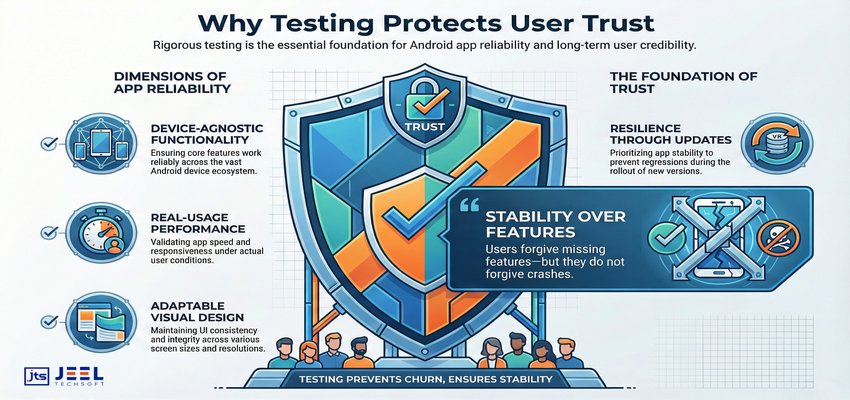
The Role of Testing in User Trust
Users may tolerate a missing feature, but they rarely tolerate crashes or bugs.
A structured Android application testing service covers:
- Functional testing across devices and OS versions
- Performance testing under real-world conditions
- Security and data integrity validation
- UI consistency across screen sizes
Apps that undergo continuous testing show significantly higher retention rates and stronger app store ratings.
Data-Driven Decisions Make Apps Smarter
Modern Android apps are not static products. They evolve based on usage data.
Smart development teams:
- Track user flows and drop-off points
- Identify features users ignore or misuse
- Optimize performance based on device analytics
These insights feed back into design and development cycles, allowing apps to stay aligned with user expectations over time.
Why Businesses Are Moving Toward Custom Android Development
Off-the-shelf apps rarely support long-term growth. Businesses today require apps that can adapt as their audience, offerings, and infrastructure evolve.
A strategic custom Android app development service provides:
- Flexibility to evolve features without re-architecture
- Stronger brand differentiation
- Better alignment with business workflows
- Long-term cost efficiency
This approach shifts Android apps from being tactical tools to strategic assets.
Choosing the Right Android Development Partner
When evaluating Android development capabilities, businesses should look beyond feature lists.
Key indicators of quality include:
- Proven experience in Android UX and UI design
- Strong emphasis on Android app scalability
- Structured Android application testing service processes
- Clear communication and documentation
A capable partner thinks in systems, not just screens.
Actionable Takeaways for Product Owners
If you are planning or improving an Android app, focus on these priorities:
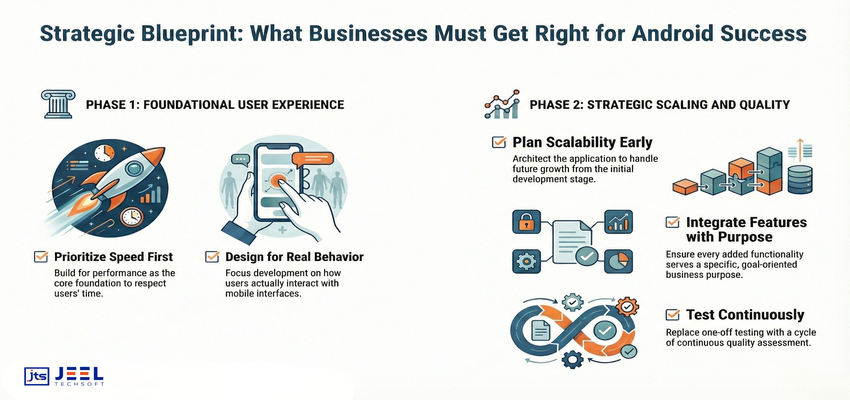
- Design for speed before adding features
- Align UX with real user behavior, not assumptions
- Integrate features selectively and purposefully
- Plan scalability early, not after growth
- Test continuously, not just before launch
These principles consistently separate high-performing Android apps from the rest.
FAQs
What is a custom Android app development service?
It is a tailored approach to Android app creation where architecture, features, design, and scalability are built specifically around business goals and user needs rather than using generic templates.
Why is Android UX and UI design critical for retention?
Because users decide whether to keep or uninstall an app within minutes based on ease of use, clarity, and visual comfort.
How does Android app scalability impact long-term success?
Scalable apps handle user growth, feature expansion, and data load without performance degradation or costly rebuilds.
What does an Android feature integration service include?
It covers strategic implementation of native APIs like location, camera, payments, notifications, and device sensors in a performance-optimized way.
Why is Android application testing service important post-launch?
Because ongoing updates, OS changes, and new devices can introduce issues that only continuous testing can catch early.
Summing Up
Modern Android users are sophisticated, selective, and quick to move on. Apps that succeed are those built with intention, where performance, design, scalability, and reliability work together seamlessly.
By investing in a well-structured custom Android app development service, businesses can meet user expectations today while staying prepared for tomorrow’s demands.
The Android platform rewards apps that respect users’ time, attention, and trust. Build accordingly.


